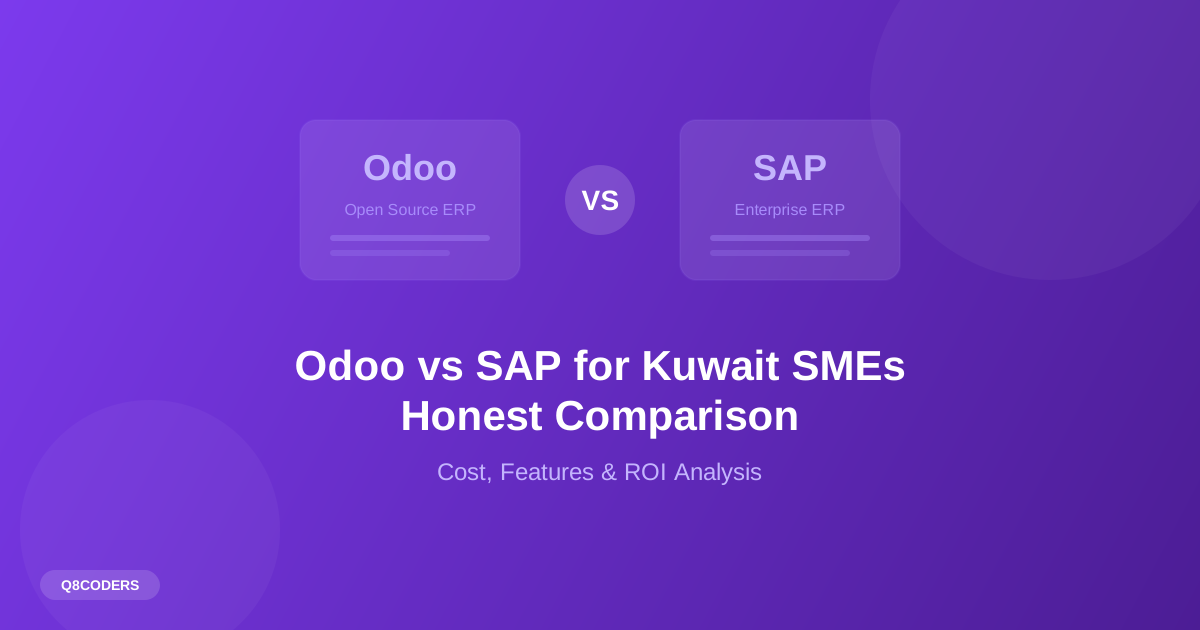
Choosing an ERP system is a decision that will shape your business operations for years. For small and medium enterprises in Kuwait, the conversation often comes down to two platforms: Odoo and SAP. Both are capable ERP systems, but they serve very different market segments and come with fundamentally different cost structures, implementation philosophies, and levels of flexibility.
This article provides an honest, side-by-side comparison to help you determine which platform makes more sense for your business.
Understanding the Contenders
SAP
SAP is the world's largest enterprise software company. Its flagship product, SAP S/4HANA, powers many of the world's largest corporations. For the SME market, SAP offers SAP Business One, a scaled-down version designed for smaller organizations. SAP has a strong reputation for handling complex, multinational operations.
Odoo
Odoo is an open-source ERP platform that has grown rapidly to serve over 12 million users worldwide. It takes a modular approach — you install only the apps you need and add more as your business grows. Odoo is known for its modern interface, flexibility, and significantly lower cost of ownership.
Cost Comparison
Cost is often the deciding factor for SMEs, and this is where the two platforms diverge most dramatically.
Licensing Costs
SAP Business One operates on a per-user licensing model. License fees typically start at several hundred dollars per user, with additional costs for specific modules. Annual maintenance fees (typically 18-22% of the license cost) add to the ongoing expense.
Odoo offers two editions. The Community edition is completely free and open-source. The Enterprise edition charges a per-user monthly fee that is substantially lower than SAP's licensing. There are no separate module fees — all apps are included in the Enterprise subscription.
Implementation Costs
SAP implementations for SMEs in Kuwait typically require significant investment. The complexity of SAP's architecture means more consultant hours, longer timelines, and higher overall project costs.
Odoo implementations are generally more cost-effective due to the platform's intuitive design and faster configuration. A typical SME implementation can be completed at a fraction of the cost of a comparable SAP project.
Total Cost of Ownership (3-Year View)
When you factor in licensing, implementation, customization, training, and ongoing maintenance, Odoo's total cost of ownership for an SME is typically 50-70% lower than SAP Business One over a three-year period. For a budget-conscious SME in Kuwait, this difference can be decisive.
Implementation Time
SAP
A typical SAP Business One implementation for an SME takes 4 to 9 months, depending on complexity. Larger or more customized projects can extend beyond a year. SAP's implementation methodology is thorough but heavy, requiring extensive documentation and formal change management processes.
Odoo
Odoo implementations are generally faster. A standard SME implementation can be completed in 6 to 16 weeks. Odoo's modular architecture allows for a phased approach — you can go live with core modules first and add others over time, reducing risk and accelerating time to value.
Verdict: Odoo delivers a significantly faster path to go-live, which means your team starts benefiting sooner and the project disruption period is shorter.
Customization and Flexibility
SAP
SAP is powerful but relatively rigid. Customizations are possible but tend to be expensive and can complicate future upgrades. SAP's architecture encourages businesses to adapt their processes to fit the software rather than the other way around. For SMEs with unique workflows, this can mean compromise.
Odoo
Odoo was built for customization. Its open-source foundation means developers can modify any part of the system. Custom modules can be created to handle business-specific processes without affecting the core platform. Odoo's upgrade path is designed to accommodate customizations, making it easier to keep your system current.
Verdict: Odoo offers far greater flexibility for SMEs that need the system to fit their business rather than conforming to rigid software constraints.
Arabic Language Support
For businesses operating in Kuwait, Arabic support is not a nice-to-have — it is essential.
SAP
SAP provides Arabic language packs, but the depth of Arabic localization varies. Some reports and interfaces may require additional configuration. Arabic support in SAP Business One is functional but can feel less polished than the English interface.
Odoo
Odoo has strong Arabic language support with full RTL (right-to-left) layout capabilities. The interface, reports, invoices, and customer-facing documents can all be generated in Arabic. The open-source community actively contributes Arabic translations and improvements. Bilingual operation (Arabic and English simultaneously) is well-supported.
Verdict: Both platforms support Arabic, but Odoo's open-source model allows for faster community-driven improvements and more flexible bilingual configuration.
Kuwait-Specific Compliance
Tax and Financial Reporting
Neither Odoo nor SAP comes fully configured for Kuwait's specific requirements out of the box. Both require local configuration for:
- Kuwait commercial company law compliance
- Local chart of accounts
- Arabic invoice formatting requirements
- K-Net payment gateway integration
The key difference is in the cost and speed of localization. Odoo's open architecture makes it faster and less expensive to implement Kuwait-specific configurations compared to SAP.
Local Partner Ecosystem
SAP has established partners in Kuwait, but their services come at premium rates. Odoo's partner ecosystem in Kuwait has grown significantly, offering more competitive pricing and often more personalized service for SMEs.
Scalability
SAP
SAP's greatest strength is its ability to handle massive enterprise-scale operations. If your business is on a trajectory to become a large multinational corporation, SAP's architecture is built for that level of complexity.
Odoo
Odoo scales well for SMEs and mid-market businesses. It can handle thousands of users, millions of transactions, and multi-company setups. For the vast majority of SMEs in Kuwait, Odoo's scalability is more than sufficient. Businesses that outgrow Odoo's capabilities are typically at a size where SAP's enterprise investment makes financial sense.
Verdict: SAP wins for very large enterprises. For SMEs and mid-market businesses in Kuwait, Odoo's scalability is more than adequate.
User Experience
SAP
SAP has invested heavily in modernizing its interface with SAP Fiori, but the user experience still carries the weight of decades of enterprise software design. Training periods tend to be longer, and user adoption can be slower.
Odoo
Odoo's interface is consistently praised for its clean, modern design. It feels more like a consumer web application than traditional enterprise software. This translates to faster user adoption, shorter training periods, and higher employee satisfaction. For SMEs where every employee's productivity matters, this advantage is significant.
Verdict: Odoo provides a noticeably better user experience, leading to faster adoption and less resistance from employees.
When SAP Makes Sense
To be fair, there are scenarios where SAP is the better choice:
- You are a large enterprise with 500+ employees and complex multinational operations
- Your industry demands SAP: Some industries and government contracts require SAP specifically
- You are already on SAP: If your parent company or key partners use SAP, integration may be simpler
- You need deep industry solutions: SAP offers highly specialized industry modules for sectors like oil and gas
When Odoo Makes Sense
Odoo is typically the better choice when:
- You are an SME with 5 to 200 employees looking for a cost-effective, comprehensive ERP
- Budget matters: You want enterprise capabilities without the enterprise price tag
- You need flexibility: Your business has unique processes that require customization
- Speed is important: You want to be operational in weeks, not months
- Growth is planned: You need a system that scales with you without massive reinvestment
- Modern UX matters: You want your team to actually enjoy using the system
The Bottom Line
For the majority of SMEs in Kuwait, Odoo delivers better value. It costs less, implements faster, offers more flexibility, and provides a better user experience. SAP remains the right choice for large enterprises with complex global operations, but SMEs that choose SAP often find themselves overpaying for capabilities they do not need.
The best ERP is the one that fits your business today and can grow with you tomorrow — without breaking the bank in either scenario.
Explore Your ERP Options
At Q8Coders, we help Kuwait businesses make informed ERP decisions. As certified Odoo partners, we have seen firsthand how the right ERP transforms SME operations. Explore our ERP solutions or check out our Odoo Success Packs designed specifically for SMEs that want a fast, structured path to ERP adoption.
Ready to see how Odoo compares for your specific business? Contact us for a free, no-obligation consultation. We will analyze your requirements and give you an honest assessment of whether Odoo is the right fit.